Quick summary: Takjun (탁전) is a small craft makgeolli bar tucked between Yeoksam and Seolleung Stations in Gangnam. Wide selection of bottles from breweries across Korea, plus the best modeum-jeon (Korean savory pancake platter) I've had in Seoul. My go-to spot for introducing makgeolli to first-time visitors.
Quick Facts
| Restaurant | Takjun (탁전) |
| Cuisine | Korean craft makgeolli bar with anju (drinking food) |
| Address | 28-7 Eonju-ro 93-gil, Gangnam-gu, Seoul (서울 강남구 언주로93길 28-7) Googlemap:https://maps.app.goo.gl/5z7rV6W5tMwAZaeZA Kakaomap:https://place.map.kakao.com/1770890042 |
| Nearest station | Yeoksam Station (Line 2) or Seolleung Station (Line 2 / Suin-Bundang Line) — about 15 min walk from either |
| Hours | Evenings only (check Naver Map for current hours) |
| Price range | ~₩30,000–50,000 per person |
| Reservation | Recommended for Fri/Sat nights and private rooms |
| Best for | Introducing makgeolli to first-timers, group dinners, rainy nights |
| English menu | provided in this post |
If you're looking for a makgeolli bar in Gangnam that locals actually go to, not a tourist trap, Takjun(탁전) is the place I send everyone to. It's tucked in to the alleys between Yeoksam and selleung Stations, it pours of the best craft makgeolli selections in Seoul, and the food alone is worth the trip.
I have a personal rule: if a foreign friend bisits Seoul, Itake them here. I've done this many times now, and the success rate is 100%. Nobody walks out unimpressed. The makgeolli selection is wide, the food is excellent, and the atmosphere makes you want to stay for hours.
New to makgeolli? It's Korean's oldest alcohol — a mikly, slightly fizzy rice wine, around 6-9% ABV. If you've never tried it, I wrote a full guide to makgeolli —what it tastes like, how to drink it, what to pair it with. Worth a read before you go(Linked at the bottom of this post)
Why Takjun is Worth the Trip
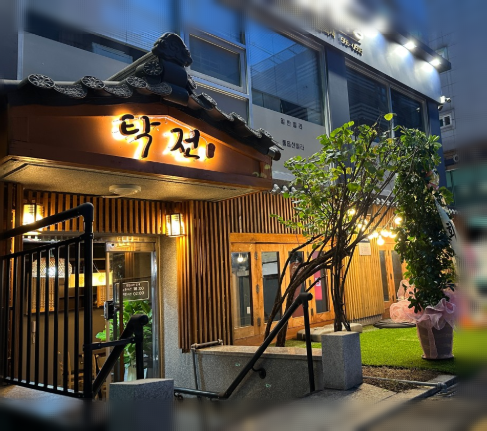
It's a makgeolli bar with a wide menu of bottles. so you can taste several different styles in one sitting, instead od just whatever the corner store happens to stock.
A few things make it stand out:
The makgeolli list is wide and varied. Takjun bring in finished bottles from breweries across the country. you could try different type of makgeolli very time you open new bottle. compare to most of the restuarant only have one or two selection.
The food is the real anchor. Most makeolli bars are about the drink first, food second. At Takjun the anju(food) is honestly the reason I keep coming back.
The space is cosy, not cramped. Half-sunken below street level with windows —tucked away but not dingy. Two private rooms for groups, each has its own heating and AC, which matters when Seoul his -10°C in January or 35°C in August.
It's small. Two private rooms, a handful of open tables, that's it. Reserve ahead if you can, especially Friday and Saturday nights.
What to Order at Takjun: A Local's Pricks
1. Modeum-jeon (모둠전) — The Star of the Menu

This is what Takjun is known for, and it's the dish I order every single time. Jeon are Korean savoury pancakes and fritters — the kind of food that Koreans traditionally make at home during holidays like Chuseok and Lunar New Year. Getting a beautifully made platter of assorted jeon at a restaurant is a treat.
Takjun's modeum-jeon (assorted platter) arrives loaded:
• Donggeurangttaeng (동그랑땡) — small meat-and-tofu patties, pan-fried in egg
• Gochu-jeon (고추전) — mild green chillies stuffed with seasoned meat, then dipped in egg and fried
• Sanjeok (산적) — skewered meat and vegetables
• Kkaennip-jeon (깻잎전) — perilla leaves stuffed with meat (the perilla aroma is the star here)
Every piece is well-made, golden, and satisfying. One platter is enough for two people. Four of us once ordered it as our main and could barely finish.
2. Dubu-myeongnan-tang (두부명란탕) — Tofu and Pollock Roe Stew

The broth is rich and deeply flavourful. it is a perfect match for cold weather and cold makgeolli.
It's not pariculary spicy or strongly aromatic, so it works even if you're new to Korean food. The tofu itself is mild; the salt-cured pollock roe.
The tofu itself is mild; the salt-cured pollock roe (myeongnan) gives the broth its punch — salty, slightly funky in a good way, and gives a tiny pop in your mouth when you bite into the roe sacs.
I'd order this as the soup component if you're already getting fried, oily anju like the modeum-jeon.
3. Maekom-nakji-bokkeum (매콤낙지볶음) — Spicy stir-fried octopus
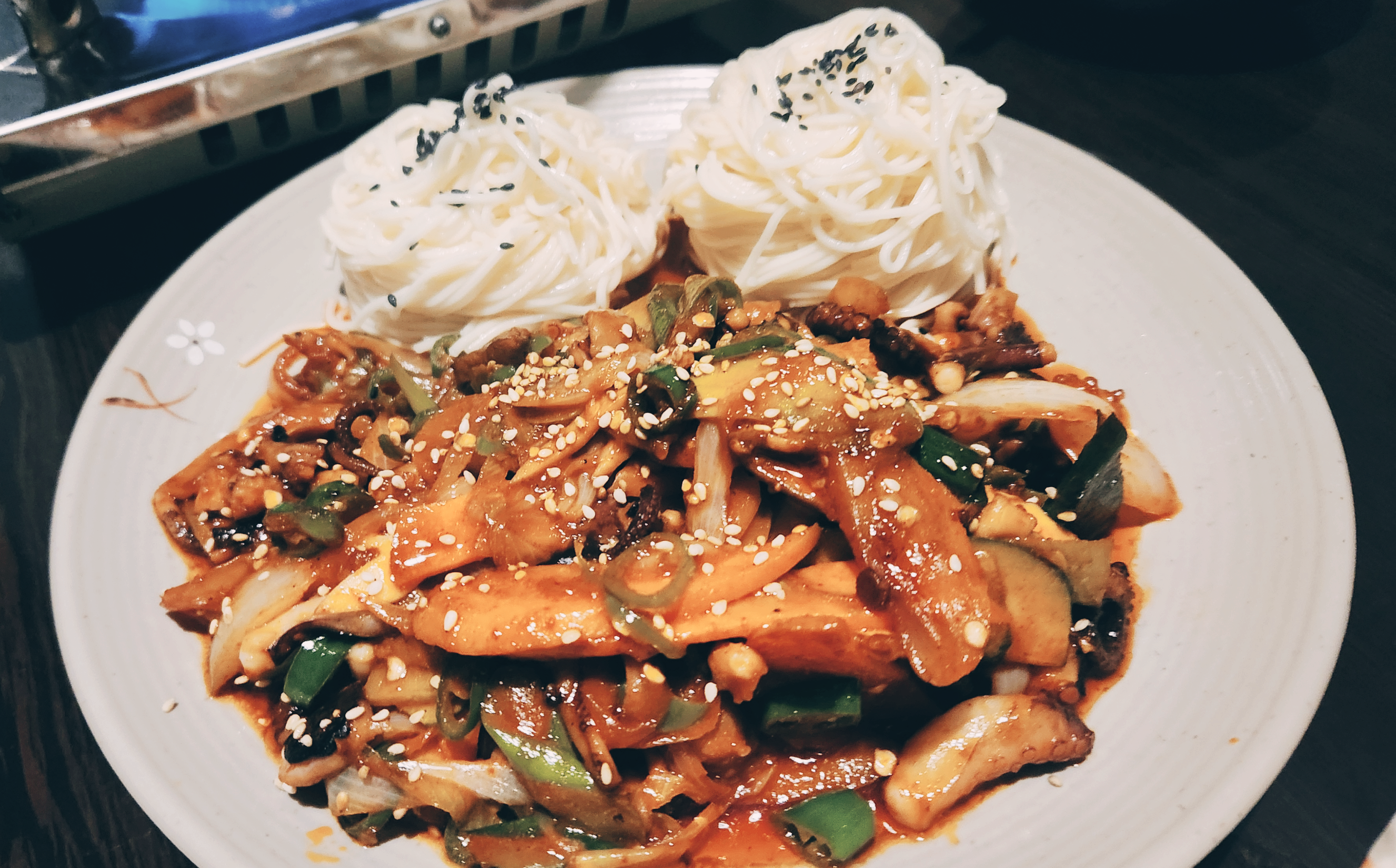
If you've hand squid before, this dish won't be a stretch. — though it's actually octopus, which has a slightly chewier bite. Koreans love this springy texture.
The spicy gochujang-based seasoning covers up most of the octopus's natural ocean smell, so what you're enjoying is the chew and the bold sauce. It comes with somyeon (소면), thin wheat noodles, sitting underneath — drag them through the sauce and eat them last. That's the play.
⚠️ Fair warning: this one is genuinely spicy. Korean spicy, not Western "medium" spicy. If you're not confident with heat, skip it and order the golbaengi-muchim (골뱅이무침) instead — a spicy sea snail and noodle salad that's much more manageable.
What to Drink: Picking Your Makgeolli
Since the list rotates, here's how I usually approach it instead of trying to memorize specific bottles:
• First time trying makgeolli? Ask the staff for something slightly sweet and lightly fizzy. It's the friendliest entry point.
• Want something more interesting? Ask for a dry, complex, naturally-carbonated bottle. These taste closer to natural wine than the supermarket stuff.
• Drinking with spicy food? Go sweeter. The sweetness and creamy taste balances the heat.
Makgeolli is easy to start. it's sweet and mild. choose what ever you wish to have just do not drink too much or you will have horrible sober the next day.
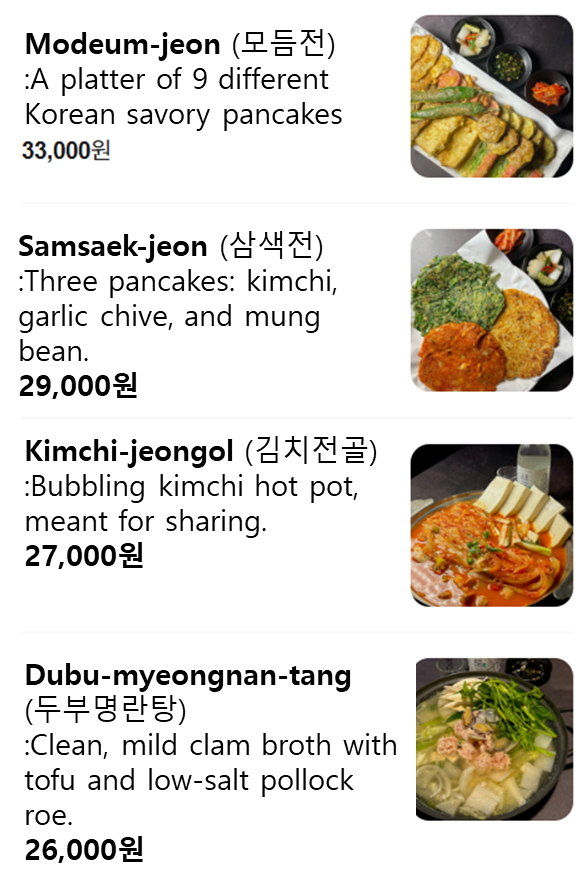
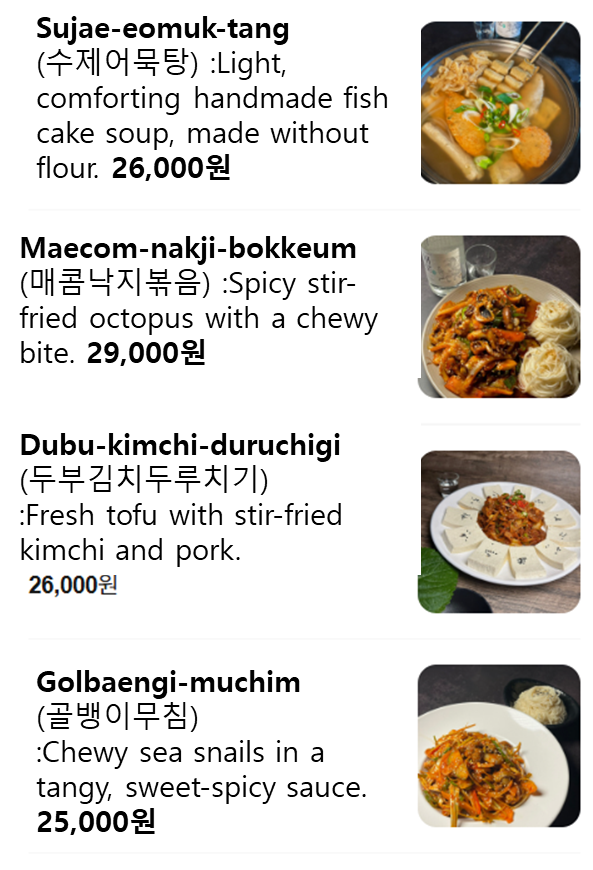
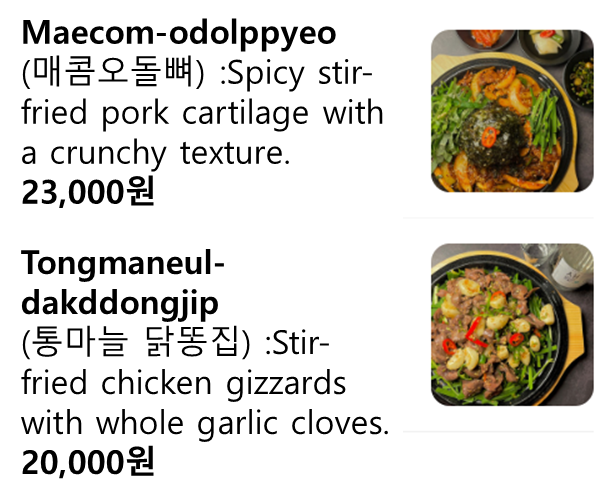
English Menu
How to Find Takjun (Yeoksam / Seolleung Station)
Takjun sits in the maze of side streets between Yeoksam Station (Line 2) and Seolleung Station (Line 2 / Suin-Bundang Line), in Gangnam-gu. And when I say maze, I mean it — the area is a tangle of narrow alleys packed with restaurants, and Takjun is easy to walk right past.
• Korean address (paste into Naver Map or KakaoMap): 서울 강남구 언주로93길 28-7
• English address: 28-7 Eonju-ro 93-gil, Gangnam-gu, Seoul
• Nearest stations: Yeoksam Station (역삼역) and Seolleung Station (선릉역) — both about 15 minutes' walk. Takjun sits roughly halfway between the two, so either station works.
* Map tip: Google Maps is unreliable in Seoul for walking directions. Download Naver Map or KakaoMap before you come to Korea — they're free, in English, and they actually work for Seoul's alleys.
Googlemap:https://maps.app.goo.gl/5z7rV6W5tMwAZaeZA
Kakaomap:https://place.map.kakao.com/1770890042
Related reads on the blog
Gomtang vs. Seolleongtang vs. Gukbap — A Foreigner's Guide to Korea's Soup Bowls
Gomtang vs. Seolleongtang vs. Gukbap — A Foreigner's Guide to Korea's Soup Bowls
Quick summary: Gomtang, seolleongtang, and gukbap often get lumped together as "Korean soup" but the relationship between them is more interesting than that. Here's how they actually fit together — and what to order based on your mood. Why Foreigners Get
letslearnsomethingnew.tistory.com
[Gwanghwamun] Keunson Hamheung Naengmyeon: The Best Cold Noodles Near Gwanghwamu
[Gwanghwamun] Keunson Hamheung Naengmyeon: The Best Cold Noodles Near Gwanghwamu
Quick summary: Keunson Hanheung Naengmyeon(큰손함흥냉면) is a beloved clod noodle spot stucked into a basement near Gwanghwamun station. House-made Hamheung-style noodles with a real snap, an exceptional spicy bibim version, and mandu(dumplings) so u
letslearnsomethingnew.tistory.com
No, You Cannot Eat a Whole Gimbap Roll in One Bite — And Other Things to Know About Bunsik
No, You Cannot Eat a Whole Gimbap Roll in One Bite — And Other Things to Know About Bunsik
If you’ve watched the Netflix show KPop Demon Hunters, you may remember Rumi shoving an entire uncut roll of gimbap into her mouth in one bite. I need to say this clearly: no Korean actually does this. We do sometimes buy a whole roll to-go and bite into
letslearnsomethingnew.tistory.com
The places I recommend are hidden gems in Seoul — spots that locals genuinely love. Because they're so authentically Korean, some flavors might be a bit intense for unfamiliar palates, and many don't even offer English menus. But in exchange, you'll get to experience the real daily life and tastes of Seoul's locals. And don't worry — I've put together an English version of each restaurant's menu in every post. Just read the Korean pronunciation out loud to the server, or simply point to the menu item to show them. If you're ready for that kind of adventure, go explore and find your own gems on this blog.
— Seoul local